
Fogged-up windows need dry air and a working ventilation system first. Use the windscreen demisting function, warm air and, where available, air conditioning according to your vehicle’s instructions. Switch off air recirculation when demisting. Cleaning improves visibility through dirty glass, but does not remove moisture from the cabin.
Why do windows fog up on the inside?
Moist cabin air meets cold glass and water condenses on the surface. Wet shoes, damp floor mats and your breath increase humidity. This is especially noticeable in cold weather. A leak or ventilation problem can make matters worse.
A dirt or grease film makes glass look hazier against the light and harder to wipe clear. Clean glass can still fog up. Demisting and cleaning therefore work together, but perform different jobs.
What helps immediately?
- Switch on the demisting function: Use the designated windscreen setting. Direct airflow towards the glass and increase the temperature and fan speed as appropriate.
- Switch off recirculation: Fresh air can help remove moisture from the cabin. Add air conditioning according to the vehicle’s instructions; its dehumidifying effect varies with temperature and system design.
- Remove damp items: Do not leave wet jackets, umbrellas or loose, soaked mats in the vehicle for extended periods.
- Wipe only while stationary if needed: A clean towel reserved for glass absorbs condensation. A dirty sleeve often just adds another film.
- Check visibility: Drive only once all the necessary areas are clear. Include the side and rear windows.
When is thorough glass cleaning useful?
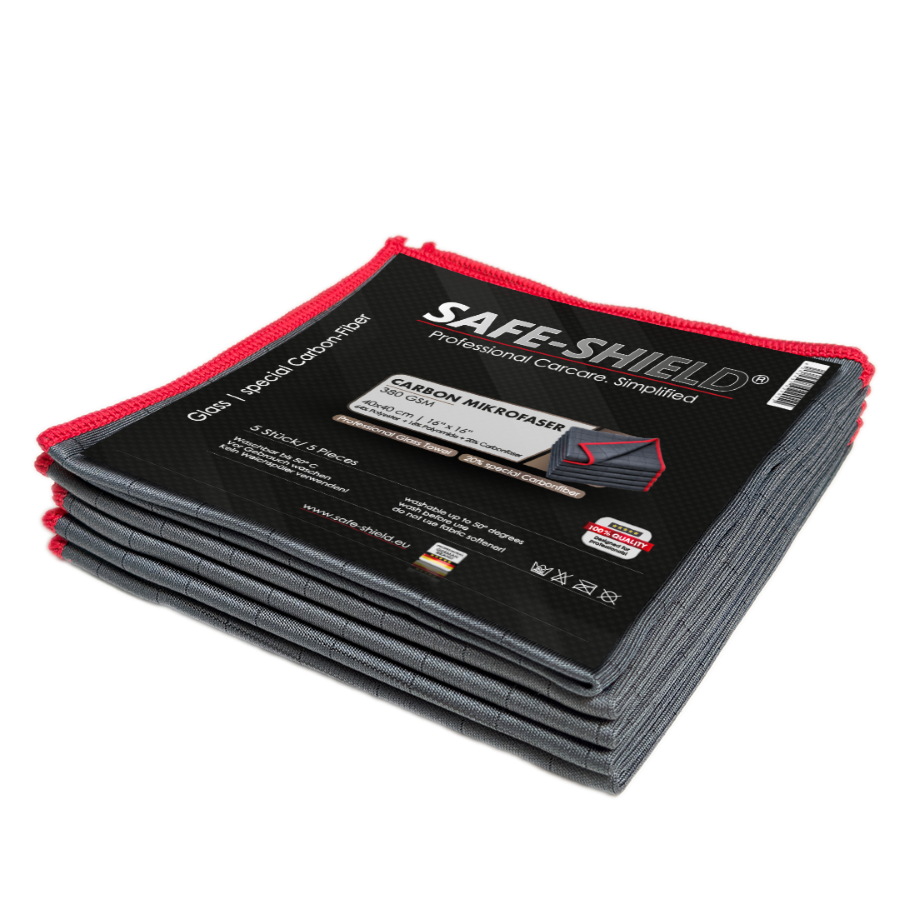
If dry glass looks greasy or cloudy under angled light, cleaning is worthwhile. For actual glass inside the vehicle, we recommend Glas Reiniger Pro and two Carbon glass towels. One loosens the film; the second removes the residue with a dry wipe.
Use a small amount on cool glass and, inside the vehicle, preferably apply the cleaner to the towel. This reduces overspray on the dashboard, displays and surrounding surfaces. Do not spray into camera housings or electrical components. For the individual steps, see Cleaning car windows on the inside.
What if the condensation keeps returning?
Check whether the carpet and mats remain damp or water is accumulating. Recurring moisture may be linked to leaks or blocked drains, for example. A clogged cabin filter or ventilation fault should also be checked.
Have a workshop investigate excessive, unexplained moisture or an unusual smell. A moisture-absorbing bag can absorb a limited amount of humidity, but cannot repair a leak. Do not dismantle the cabin filter or drains speculatively if you are unfamiliar with the specified maintenance procedure.
Which supposed solutions have limited benefits?
Household remedies such as shaving foam or washing-up liquid may leave a film and are unsuitable as routine care for every window. Anti-fog products must be approved for the surface, including any coatings or films. An exterior glass coating does not solve an interior moisture problem.
Distinguish condensation from exterior smearing too. If the wipers leave a film, read Windscreen wipers leaving streaks. For the exterior glass, see Cleaning car windows on the outside.
Frequently asked questions
Does cleaning stop windows fogging up?
It removes dirt film and improves visibility through dry glass. It does not reliably prevent condensation caused by humid air.
Should I switch on recirculation?
Generally, switch it off for demisting and use the designated windscreen function. Follow your vehicle’s operating instructions.
Is our glass cleaner an anti-fog product?
No. Glas Reiniger Pro is a cleaner for actual glass. We do not promise a lasting anti-fog effect.
What does ice on the inside of the windscreen in the morning mean?
There is a lot of moisture in the cabin. Investigate the cause and safely restore clear visibility; do not use hot water.



Leave a comment
All comments are moderated before being published.
This site is protected by hCaptcha and the hCaptcha Privacy Policy and Terms of Service apply.